M. Sanviti, S. Marina, X. Rodríguez-Martínez, J. Asatryan, V. Di Lisio, S. Hultmark, J. Gutierrez, E. Solano, J. J. Rech, E. L. Solla, W. You, A. Tercjak, M. E. Vázquez, D. Cangialosi, C. Müller, H. Ade and J. Martin, Adv. Funct. Mater., 2025, 35, 2503634.
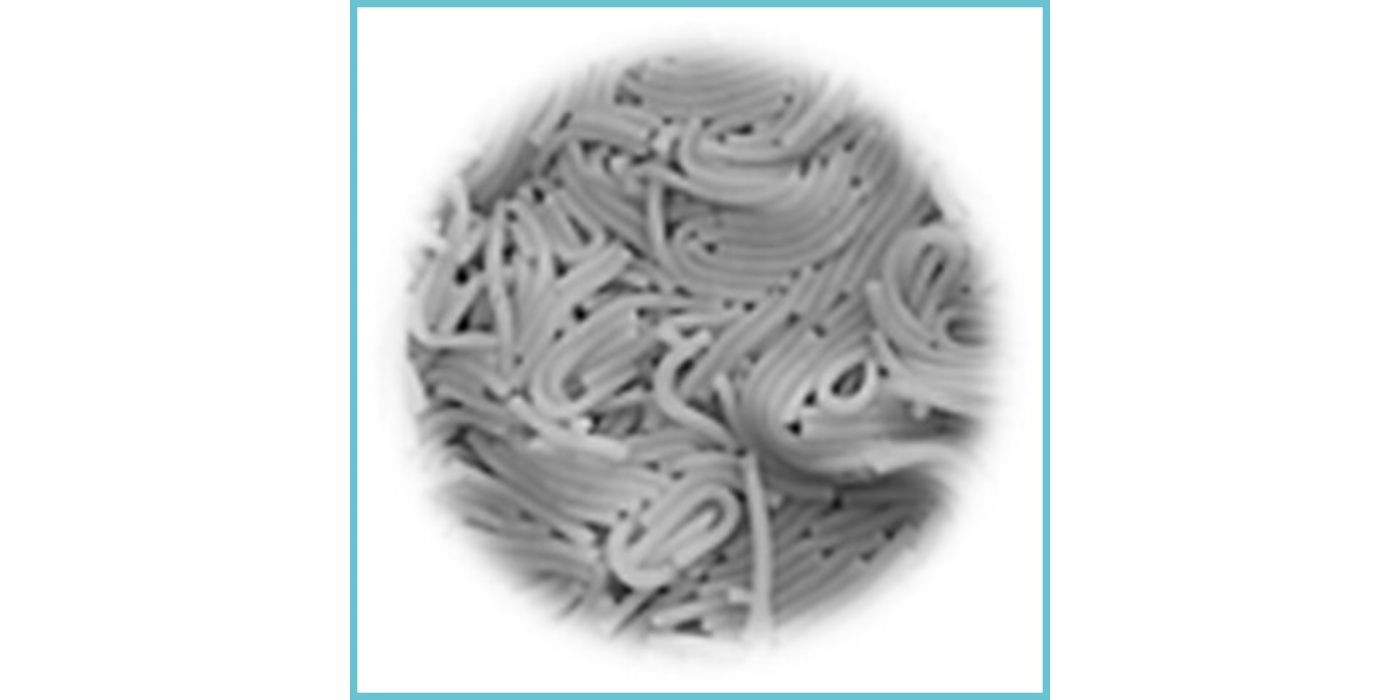
The performance of organic electronic devices, such as solar cells, depends on understanding and controlling the solid-state microstructure of semiconducting polymers. In this study, a detailed understanding of the aggregate states, solid-state microstructure, and thermotropic behavior of the best-performing family of polymers for solar cells, i.e., benzodithiophene-based semiconducting polymers, is provided. Using D18, PBnDT-FTAZ, and PBDB-T-Cl as model systems, this study reveals a unique solid mesophase, distinct from previously observed polymer mesophases, comprising stacked solid-like and liquid-like layers. This mesophase resembles sanidic structures while also sharing features with columnar mesophases like condis crystals and paracrystals. At a larger length scale, it organizes into nanoscale fibril-like domains, with polymer backbones aligned along the fibril axis, coexisting with amorphous-like glassy regions, reported here for the first time. Notably, high-performance polymers such as D18, D18-Cl, and PM6 contain minimal glassy regions. The thermotropic behavior of this biphasic nanomorphology is also examined, providing insights into how thermal annealing influences polymer structure. Understanding these solid-aggregate states, the microstructure, and the thermal behavior enables a more precise framework for defining structure–function relationships in semiconducting polymers. This will have a significant impact on the entire field of organic electronics, from organic photovoltaics to bioelectronics to wearable electronics.